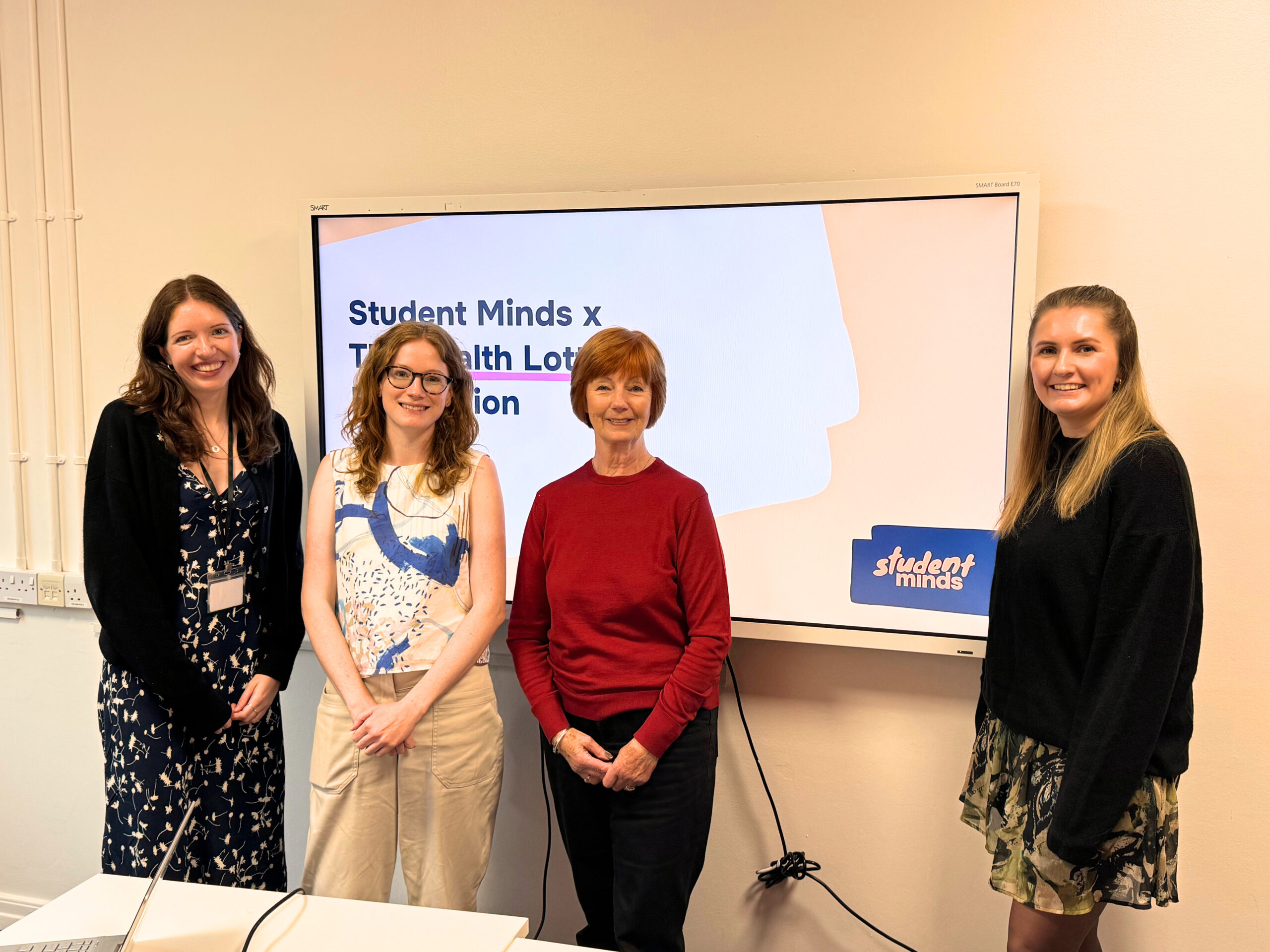
Our team has been on the road again. This time our CEO, Delva Patman, was joined by Operations Manager, Paul Davies, on a visit to national student mental health charity Student Minds. The visit took place at the University of Leeds campus, which is where the charity is based.
Earlier this year, thanks to players of The Health Lottery, we awarded Student Minds £15K for a pilot project to specifically work with students from racialised backgrounds.
Creating student leaders from racialised communities
Delva and Paul met some of the Student Minds team to hear about empowering new student union officers and student society leaders to help address health inequalities. Working across three universities, their project will provide training and support for 6 months.
This includes coaching from specialist EDI and anti-racism consultant Osaro Otobo.
Delva said,
“We were impressed by the focus on empowering students to speak on behalf of themselves and challenge when necessary, rather than Student Minds trying to ‘fix’ issues on their behalf.”
The trained individuals will be armed with the tools they need to develop mental health toolkits and the resilience needed to protect personal wellbeing. These people offer peer support, speak up on behalf of others and hold university leaders to account.
Paul said,
“You could really feel the passion and drive from the individuals we met, not just in supporting students but lobbying for change.”
No student should be held back by their mental health
Due to the cost-of-living crisis, 70% of students are now working part time alongside their studies – normally 15 hours, on average, per week. This is a real theme across the industry. Balancing finances, paid-work, study and housing needs can be taxing for young people living independently for the first time.
Rosie Tressler, CEO, Student Minds said,
“There is a real cliff edge when students reach adulthood. We find that signposting to what support services are available, varies by area. It’s especially challenging for racialised students who often face unique barriers to accessing support and who have to navigate racial inequalities in both higher education and healthcare.”
Thanks to Kate Mitchell, Nicola Mason and Rosie Tressler for taking the time to talk to us and tell us about their ambitions for the project.
We look forward to hearing more later in the year.